
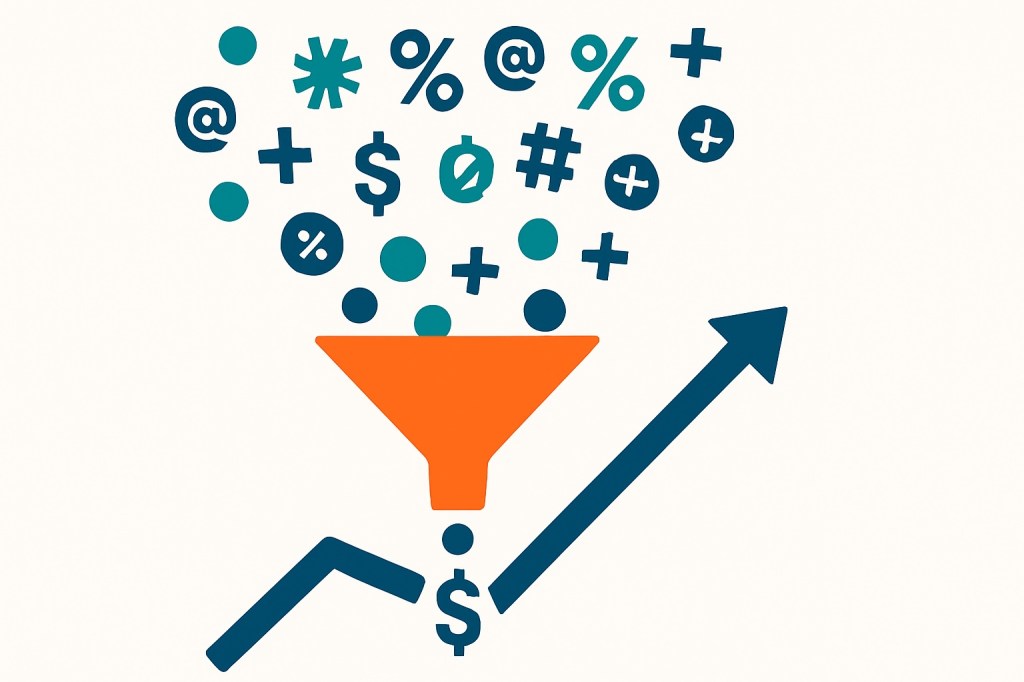
I once loaded up 200+ keywords into an intent platform. It looked strategic, but it was just noise that buried the real signals. We were drowning in data but starving for insights.
The Problem with Bloated Keyword Lists
A bloated keyword list generates a lot of false positives. An account would appear “active” just because a junior marketer skimmed a blog on “cybersecurity basics.” Our generic terms picked up students doing research, HR teams looking for training, or facilities staff searching for “physical security.” These activities create vanity metrics, not pipeline.
In a past role, I decided to fix this. Here’s what happened when I cleaned up one of my keyword lists:
- Before: 180 keywords, generating over 1,200 monthly signals with a 6% SDR qualification rate.
- After: Cut down to just 22 focused keywords, generating 340 monthly signals with a 28% SDR qualification rate.
Our intent-influenced pipeline more than doubled in just three months.
The highest-converting intent keywords aren’t generic. They are sharp and specific. They share three key traits:
- Solution-specific: Think “marketing automation platform,” not the vague term “marketing.”
- Implementation-focused: This is about “CRM migration,” not just “CRM software.”
- Comparison-driven: Examples like “Salesforce vs. HubSpot” show a clear intent to buy, unlike the broad “sales tools.”
When you cut down to fewer, sharper terms, the noise disappears, and the signals you get actually match real buying behavior.
Data Hygiene Is the Multiplier
Getting cleaner signals requires discipline. You need a process to keep your keyword list lean and relevant.
- Audit quarterly: Review which keywords have generated qualified leads in the last 90 days.
- Prune aggressively: If a keyword hasn’t driven meaningful pipeline activity in 90 days, cut it. Don’t be sentimental.
- Tie every keyword to a campaign: If you can’t connect a keyword to a current sales play or marketing initiative, it’s probably not useful.
A smaller, sharper keyword set makes your insights more actionable.
The Takeaway
More keywords equal more noise. Fewer intentional keywords equal more pipeline.
Marketers don’t need another dashboard; they need sharper inputs. Cleaner signals lead to cleaner targeting, which in turn means campaigns that connect with the right accounts at the right time with the right message. That’s how intent stops being a vanity metric and starts being a revenue driver.
Ready to clean up your own keyword lists? What’s one term you know you need to cut?





 My Ethos Lab